Featured Articles
- Retirement Adventures: Exploring the Growing Trend of 'Retirement Sabbaticals' for a Fulfilling Future
- "Retirement in the Metaverse: How Virtual Real Estate Might Shape Your Golden Years"
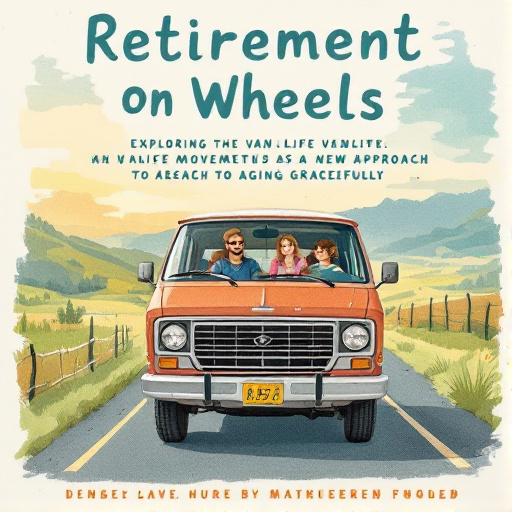
- "Retirement on Wheels: Exploring the Vanlife Movement as a New Approach to Aging Gracefully"
- Retirement Planning for the Unplugged: Embracing Minimalism and Digital Detox Before You Retire
- "Retirement Reimagined: Exploring the Rise of Eco-Friendly Living for Seniors in a Post-Pandemic World"
The Rise of 'Retirement Sabbaticals': A Bold New Approach to Life After Work
The Rise of 'Retirement Sabbaticals': A Bold New Approach to Life After Work
The concept of retirement is evolving, and one of the most innovative ideas that has emerged is the 'retirement sabbatical.' This bold approach challenges the traditional notion of retirement, advocating for a break from work to rejuvenate, explore passions, and ultimately redefine our post-work lives.
Understanding the Sabbatical Concept
Imagine this: After decades of waking up to the sound of an alarm, you suddenly find yourself free from the daily grind. But instead of jumping straight into a life of leisurely coffee breaks and endless Netflix binges, you take a pause—one that allows you to reflect, recharge, and rediscover who you are beyond your career. That’s the essence of a retirement sabbatical.
A Case Study: The Williams Family
Take, for example, the Williams family. After 30 years in education, Sarah Williams, now 62, decided to take a year off to travel the globe with her husband, Tom. Their sabbatical was not just about traveling; it was about reconnecting and exploring hobbies that took a back seat during years of work, like photography and writing. During their travels, they visited 20 countries and documented their experiences, which eventually led them to publish a travel blog, generating an income that they never anticipated.
The Numbers Speak
According to a 2022 survey by the Employee Benefit Research Institute, nearly 69% of adults imagine retirement as a time for relaxation, travel, or other leisure activities. However, only 28% of these individuals strongly believe they’ll actually achieve the lifestyle they envision. So, where’s the disconnect? The traditional retirement setting often lacks fulfillment despite the freedom it offers. Retirement sabbaticals present an opportunity to find both pleasure and purpose.
Why Choose a Sabbatical Over Traditional Retirement?
Now, let's get one thing straight: retirement isn’t outdated—it just might not be right for everyone. A retirement sabbatical is particularly appealing to those who find traditional retirement too uninspiring or who feel unprepared for the abrupt transition from work to leisure. It's about crafting a transition that fosters excited exploration instead of potential ennui.
Financial Considerations
Sure, the idea of taking time off sounds plush, but let's talk dollars and cents. The reality of a retirement sabbatical is that it can be financially manageable, even lucrative. Many individuals find that temporary side gigs or consulting in their areas of expertise allow them to maintain some financial stability while pursuing their newfound interests. In fact, a recent report from the Freelancers Union states that freelance workers in the U.S. contribute $1 trillion to the economy annually (Freelancers Union, 2023). Why not add your own unique skills to that pool during your sabbatical?
The Ripple Effect: Generational Impacts
It's not just the retirees feeling the aftershocks of the sabbatical trend. The mentality of living a long and fulfilling life has seeped down to younger generations, inspiring the idea that traditional career paths can be both flexible and rewarding. Many millennials and Gen Zers are viewing life through a multifaceted lens of experiences rather than simply a rat race towards retirement. As a 25-year-old writer myself, I see this shift as a breath of fresh air—a new sense of freedom in defining success.
Rediscovering Yourself
During your sabbatical, the exploration of personal passions can yield unexpected rewards. Perhaps you’ve always wanted to learn how to play the guitar or master the art of cooking. The beauty of taking time off allows for self-discovery that a typical retirement may not fully embrace. As Helen Keller once said, “Life is either a daring adventure or nothing at all.” A sabbatical allows for the daring adventure to unfold.
Filling Your Time Wisely
Comparatively, the idea of aimlessly drifting into retirement does raise some eyebrows. A thoughtful approach is crucial. Many people take sabbaticals to volunteer, learn new skills, or immerse themselves in educational pursuits. For instance, consider Bob, a retired corporate lawyer who spent his sabbatical teaching legal rights in underserved communities worldwide. Not only did it provide him with purpose, but it also brightened the lives of countless individuals who benefitted from his expertise.
International Perspectives
Sabbaticals are not just an American phenomenon; they have gained traction around the globe, particularly in European countries where they are integrated into workplace culture. For example, Finland has developed a trend where employees take structured sabbaticals every five to seven years, leading to increased employee retention and overall job satisfaction (Finnish Jakelut, 2023). We can learn from these models, applying them to our unique American landscape.
Challenges of a Sabbatical
Of course, there are pitfalls to this alluring journey. There’s a tangible fear of falling out of touch with professional networks, or simply the hesitation to step off the well-trodden path. It’s natural to worry about being “forgotten” or facing difficulties returning to the workforce. But here’s the interesting twist: studies have found that individuals return from sabbaticals with renewed vigor and a fresh perspective that often makes them even more valuable in their fields (Harvard Business Review, 2023).
The Emotional Terrain
Initially, the emotional landscape may shift dramatically. Transitioning from a structured life to a freeform existence can be both exhilarating and disorienting. It’s essential to prepare yourself for some turbulence during the switch. Consider engaging in mindfulness practices or journaling to document your thoughts and feelings during the transition—after all, these moments can be equally valuable as the experiences themselves.
The Personal Growth Factor
Success claims abound for those who decide to embrace this path. A staggering 78% of those who take sabbaticals report an increase in life satisfaction, stating that they have learned valuable skills, made meaningful connections, and ultimately felt a deeper sense of purpose (National Institute of Health, 2022). You may think that learning to play a new instrument or picking up painting is just a hobby, but these experiences fuel personal growth that often transcends traditional career benefits.
The Narrative Shift
Once considered a luxury, the retirement sabbatical is now being viewed as an opportunity to reshape the narrative around aging. With setbacks in traditional pensions and social security uncertainties, the necessity for a more versatile approach to retirement is clear. The reality is, we aren't simply "retiring"; we're redefining our golden years.
In With the New: Shaping a New Norm
It’s time to shift the paradigm of what retirement looks like. The emergence of retirement sabbaticals signals a cultural shift that recognizes the importance of experiences over material possessions. One statistic to note is that young adults are saving deeper into their careers with the notion of enjoying life to its fullest. According to a survey by The Pew Charitable Trusts, 60% of respondents between ages 18 and 34 stated that they prioritize experiences over acquiring new things (Pew, 2021).
Final Thoughts: Your Next Chapter Awaits
As you read this article, perhaps retirement seems distant or daunting. The idea of a retirement sabbatical beckons like a siren song, inviting you to explore. So embark on the journey—create a plan, set some goals, and don’t be afraid to leap into the unknown. After all, life is a grand adventure, and a retirement sabbatical might be just what you need to truly embrace it.
In the end, it isn’t just about retiring; it’s about what ignites the soul and fuels passions. What’s your next bold move? By reconsidering the traditional frameworks of retirement and opting for a sabbatical instead, you might just discover the richness of life waiting on the other side.
Related Articles